Image Map

Friday, April 8

Teach Inferencing Like a Boss with Inferring Worksheets

Teaching inferencing can be a challenge. Honestly, when I first started teaching I found myself Googling, “what is an inference?” It took a good deal of trial and error and years working around the kidney table with my kiddos before I finally felt like I had figured inference instruction out. Targeted reading instruction is my favorite method of guided reading instruction. So how can you teach targeted inference skills? How can you help your kiddos master inferring understandings? Read more to learn how I teach reading inference skills with ease using inferring worksheets, videos, inferring anchor charts, and more.

inferring-worksheets


What is an Inference? 

When I first introduce the inferring concept to my students, I use video. I try to teach multiple intelligences as much as possible, so incorporating a technology component to an otherwise visual-auditory lesson is a plus. My favorite video to us when I teach inference is the Inferring video from Brain Pop Jr. You can explore that video by clicking HERE. I love this video because it does an excellent job of boiling down the inferring concept and using basic inferring examples that we can use as a stepping stone later in our lesson. 

inferring-worksheets


Using Inferring Anchor Charts:

Using visual tools to anchor student learning is a must-do. I love using colorful visuals like my inferring anchor chart when introducing and practicing inferring reading skills. I use the inferring anchor chart to break down how to infer, step by step. Once my students have a firm foundation for what an inference is, it is time to practice! I use inferring worksheets that pair with my inferring anchor chart to practice applying inference skills in texts. You can explore the inferring anchor chart and inferring worksheets that I use by clicking HERE.


inferencing-anchor-chart


Using Inferring Worksheets:

After I demonstrate inferring and work through examples alongside my students, it is time for them to show their inferencing knowledge. I accomplish this through inferring worksheets. These worksheets are easy, engaging, and no prep. I love using inferring worksheets initially at the guided reading table, then as independent practice. Using inferring worksheets allows my students to demonstrate their inference knowledge and push their thinking by requiring them to provide text evidence to support their thinking. You can grab their inferring worksheets that I use FOR FREE by clicking HERE now.


inferring-worksheets


After my students are getting their groove with inference, I expand their opportunities to work on inferencing. I provide my students with a different inferring worksheet, an inference graphic organizer. This is a graphic organizer that allows my students to continue working on their inferencing skills inside the books that they are currently reading. If you want to explore the inferring worksheets/ graphic organizers that I use, click THIS LINK.

inferring-worksheets


inferring-worksheets


Wednesday, March 9

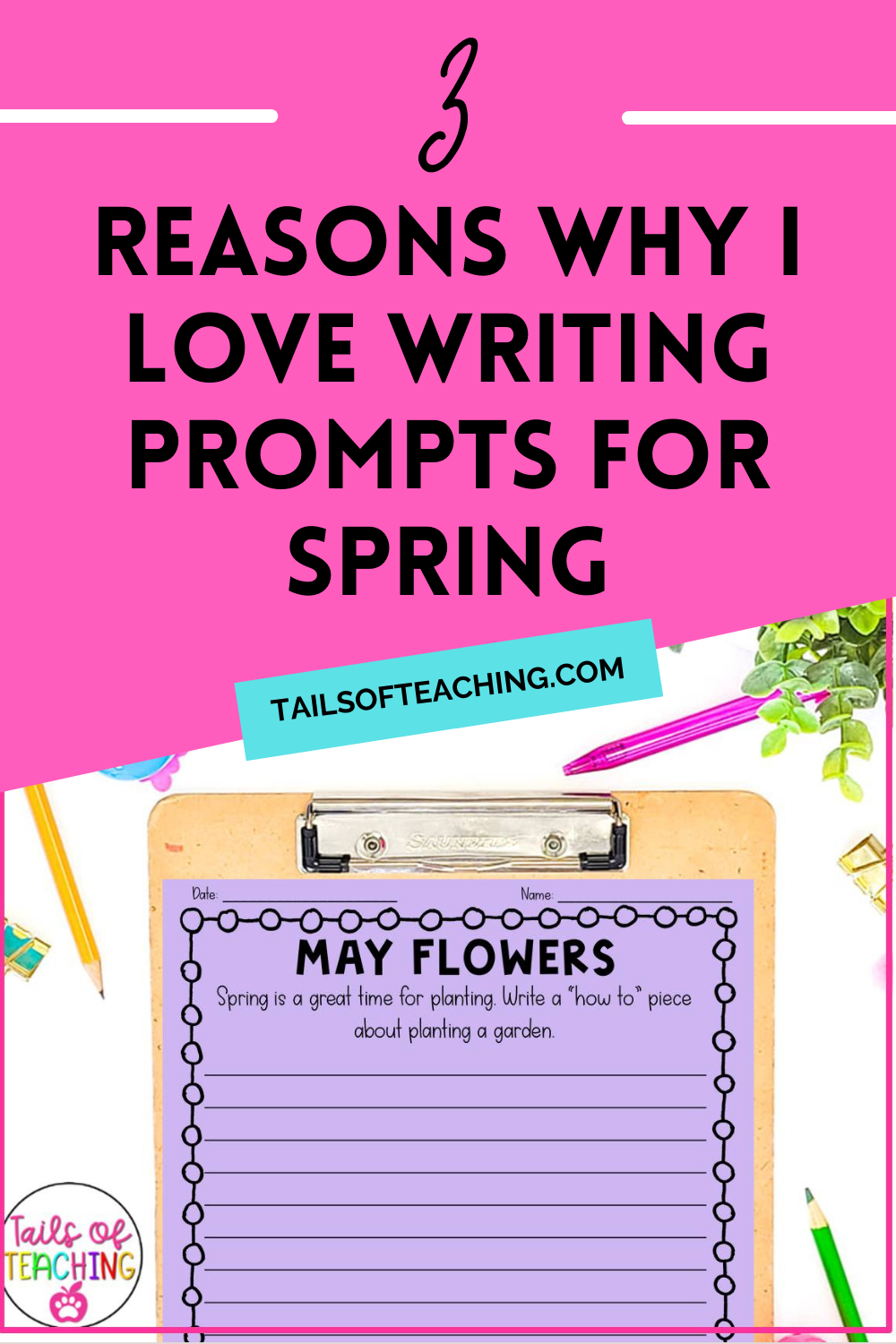
3 Reasons Why I Love Writing Prompts For Spring

writing-prompts-for-spring


The snow is melting, birds are returning, and writers are writing. Yes, that’s right. Every day my students work on their writing skills through the use of daily writing prompts. Since spring has sprung, it is time that we bust out our writing prompts for spring! I love allowing my students the opportunity to share their spring favorites in morning meetings and writing time through the use of my writing prompts for spring. From Spring holidays, Spring “would you rather” prompts, and more, the student engagement is up and pencils are moving when I switch over to our writing prompts for spring. Want to know what I’m a buzz about? Read more to explore how I use our writing prompts for Spring in my classroom now.


Writing Prompts for Spring- March

writing-prompts-for-spring


March is time for Women's History month, leprechauns, and Spring fever! If your students are like mine, then that means they have a lot to talk about and a great desire to share about these events. Why not let your students use their voice inside of their writing prompts for Spring? I love using the St. Patrick’s Day writing prompts as we lead up to the lucky day. (Explore more St. Patrick’s Day activities by clicking HERE). Students can type or write on the worksheet when I use these writing prompts for Spring. The kiddos love the chance to write and share about leprechauns, luck, and all things green. I love the increased engagement that the seasonal writing prompts for spring bring into the classroom. If you want to explore the No-Prep March writing prompts for Spring that I use, click THIS LINK.


Writing Prompts for Spring- April

writing-prompts-for-spring


April is time for gardening, poetry, and ugh rain! Because poetry is such an expressive writing exercise, I love to use the April poetry writing prompts for Spring. I find it fun to save the poetry writing prompts for Spring that my students complete and compile them into a Spring poetry booklet. Kiddos love being able to look back at their first poetry prompt and compare it to their last. You can use these writing prompts for Spring to have powerful conversations with your students about their growth as poets and writers. If you want to explore all of my April writing prompts for Spring, including the poetry prompts, then CLICK THIS LINK.


Writing Prompts for Spring- May

writing-prompts-for-spring


May is the time to help students fine-tune the writing skills that they have learned all year long. I use May to teach and review target writing strategies such as proper use of dialogue, showing not telling skills, and more. This targeted skill instruction can be a bit dull for my students at times. During these lessons, I ramp up the student engagement by using writing prompts for Spring. The writing prompts for Spring that I use in May range from silly to mysterious, but they all have one thing in common, a must-share factor. When I designed the May writing prompts for Spring, I knew that I needed to include topics like buried treasure, Mother’s Day, chocolate chip cookie thieves to keep my students yearning to write and share. By using May writing prompts for Spring that peak my student’s interest, the student buy-in battle is easily won and I can focus my attention on helping my students flourish as writers. Want to use the May writing prompts for Spring that I use? Click HERE to explore the prompts now.


I hope you enjoyed hearing about how I use writing prompts for Spring in my classroom. Did you know that I have daily, NO PREP writing prompts for the whole year? CLICK HERE to explore my Year Long Writing Prompts now! Want to use daily writing prompts to help your students increase their writing skills? CLICK HERE to read my blog post all about it!

writing-prompts-for-spring


There are countless ways to use writing prompts for spring to increase the writing skills of our students. I hope you enjoyed reading my top reasons that I love using writing prompts for spring with my students. Would you like to try a FREE sample of the no-prep writing prompts that I love so much?


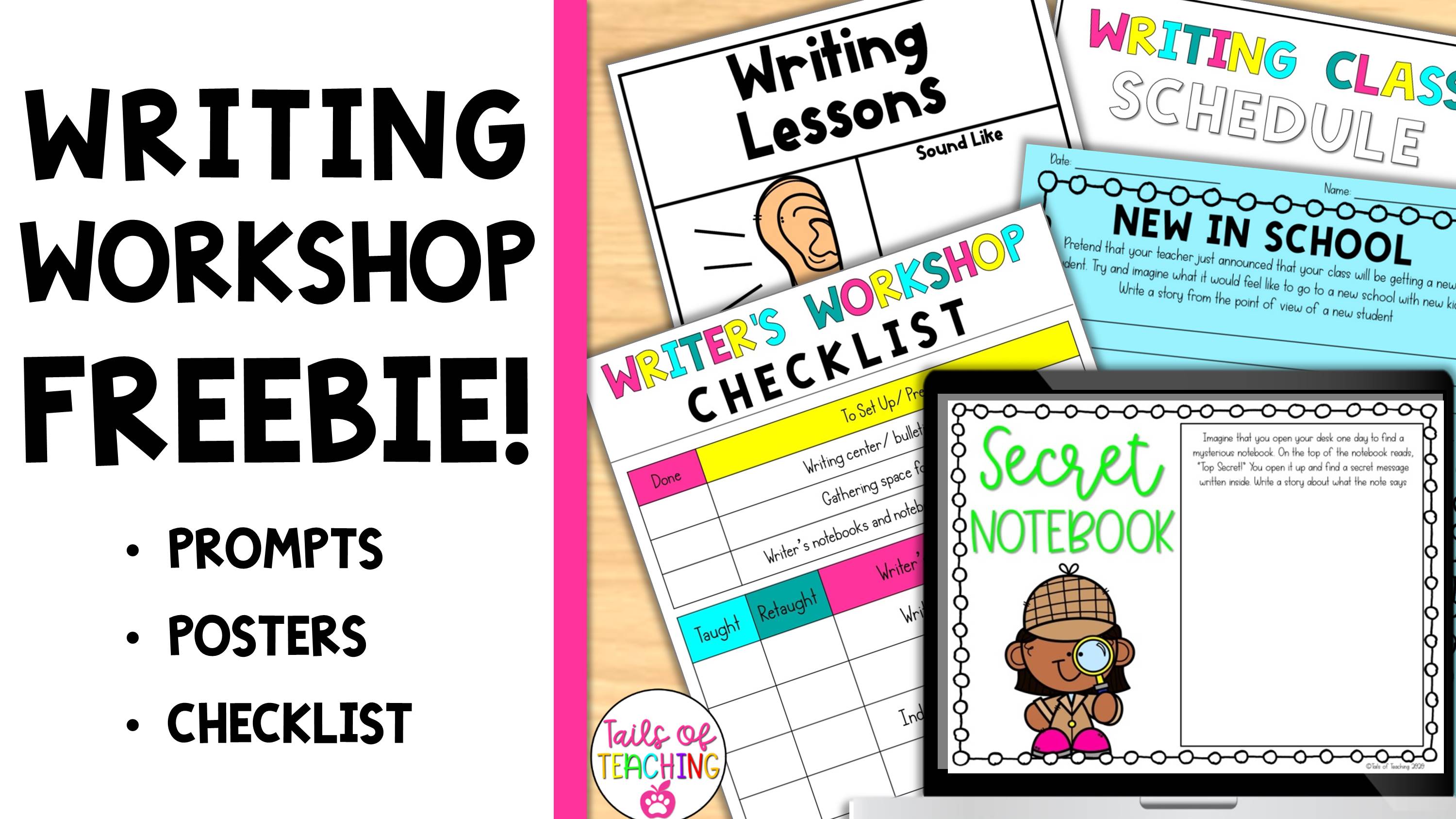
Are you ready to rock your writing workshop this year? I've got your back and the tools you need with my epic new writing workshop FREEBIE! This writing workshop includes everything you need to get your writing block rocking, rolling, and make a massive impact with your students! I would love to share my writing workshop checklist, posters, and 5 printable + Google Classroom ready writing prompt resource with you so you can try out the tips you just read about! Simply click the button below and download your FREE writing workshop resources now! 

writing-workshop


Sunday, February 27

Top 4 Must-Do St. Patrick’s Day Worksheets and Activities

st-patrick's-day-worksheets


Hey teachers! Can you believe that it is almost St. Patrick’s Day? That means that it is time for stories of magical little leprechauns, St Patrick’s Day worksheets, and a pinch of all things green. I love celebrating holidays in my classroom. And even though decorating the classroom or having a party is a blast, there just isn’t always time in the school day. So how can you still bring some St. Patrick’s Day fun to your students this year? With St. Patrick’s Day activities and St Patrick’s Day worksheets! Whether you share a read aloud about luck or use a St Patrick’s Day worksheet to help students spin a leprechaun tale, St Patrick’s Day in the classroom can be fun, seamless in your schedule, and no prep. Read more to explore all of my favorite St Patrick’s Day activities and St Patrick’s Day worksheets now!

st-patrick's-day-worksheets


St Patrick’s Day Worksheets- Spelling Activities


Can you spell lucky? Because lucky is exactly how I feel when I pull my Editable March spelling activities out of my teacher bins. These spelling activities are not only great St Patrick’s Day worksheets for spelling practice but for the whole month of March! In the past, my students have had so much fun playing pin and write spelling activities, doing Shamrock St Patrick’s Day worksheets for spelling practice, and so much more! You can explore the editable March spelling activities that I use for St Patrick’s Day worksheets and spelling practice by clicking THIS LINK. 

st-patrick's-day-worksheets


St Patrick’s Day Worksheets- Writing Prompts


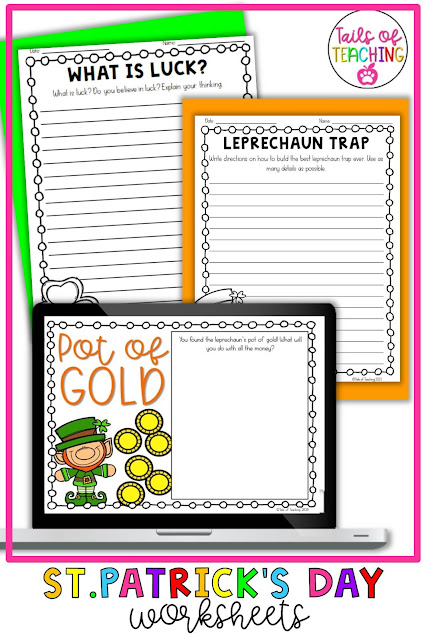
Writing prompts are a daily tool inside my writer's workshop. We use them as warm-up activities or exit tickets. You can read more about how to use writing prompts to help your students boost their writing skills in my blog post, just CLICK HERE. When March comes around, I simply print (or assign on Google Classroom) a whole new set of themed prompts. These March writing prompts are the perfect St Patrick’s Day worksheet because St Patrick’s Day writing prompts are included. These writing prompts include topics like how to catch a leprechaun, defining what luck means to each student, snatching a leprechaun's pot of gold, and more! These St Patrick’s Day worksheets make awesome Morning Meeting activities too. Simply have students pair up to write their St Patrick’s Day story and then save time for a share. This St. Patrick’s Day activity makes for easy mornings that your students will love! If you want to explore the March writing prompts that I use for my writing St Patrick’s Day worksheets, click THIS LINK now.

st-patrick's-day-worksheets


St Patrick’s Day Activities- St. Patrick’s Day Stories


If you follow me on social media, you know that read aloud time is one of my favorite parts of the school day. I love gathering my students together to share in the love of a good story! So, I wanted to share another one of my favorite St Patrick’s Day activities with you, read alouds! CLICK THIS LINK or the PHOTO below to explore my favorite St. Patrick’s Day stories now.

st-patrick's-day-worksheets


St Patrick’s Day Activities- St. Patrick’s Day Project Based Learning

st-patrick's-day-worksheets


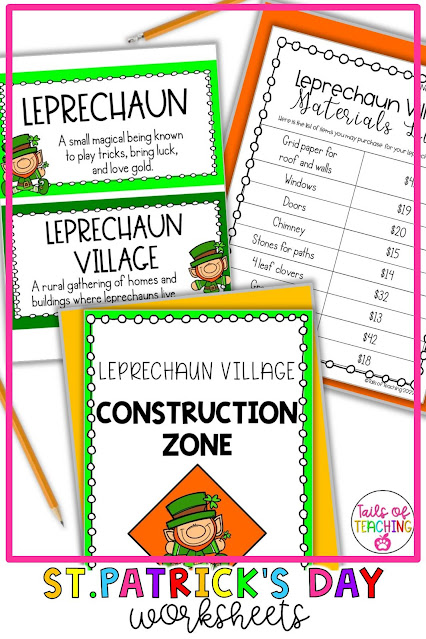
Project based learning is my jam! When you can incorporate interdisciplinary learning and boost student engagement through the roof, my teacher heart just signs! You can learn all about Project Based Learning in my blog post, just click THIS LINK. I have found that project based learning is excellent to implement around holidays and before school breaks. During these times students are overflowing with energy and need a hands on, deep thinking project to keep them engaged and attending to their learning. This is exactly why I designed a St. Patrick’s Day Project Based Learning unit all about leprechauns! In this St Patrick’s Day activity pack, students are tasked with designing and building a leprechaun village. The St Patrick’s Day worksheets inside this unit guide students through their building and planning process, helping them stick to their budget as well as area restraints. These St Patrick’s Day worksheets also include math about their leprechaun village and writing prompts too. Trust me, your students will feel so lucky to participate in a St Patrick’s Day activity like this one. If you want to explore my St. Patrick’s Day Project Based Learning Unit, click THIS LINK now.


st-patrick's-day-worksheets


I hope you enjoyed reading about my favorite St Patrick’s Day worksheets and St Patrick’s Day activities! Hopefully, these teaching tools and ideas will help you to bring a little four-leaf clover fun into your classroom this St. Patrick’s Day.


Tuesday, January 25

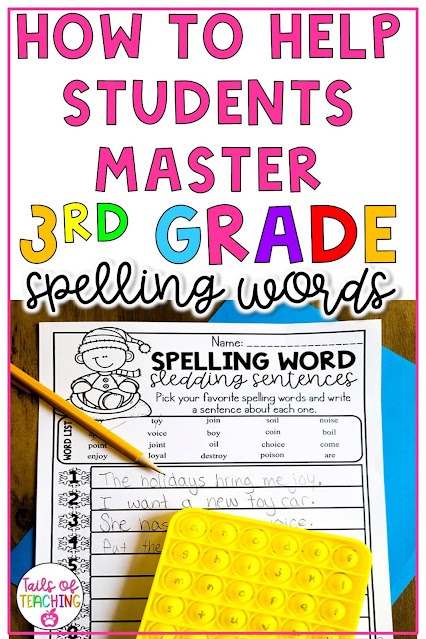
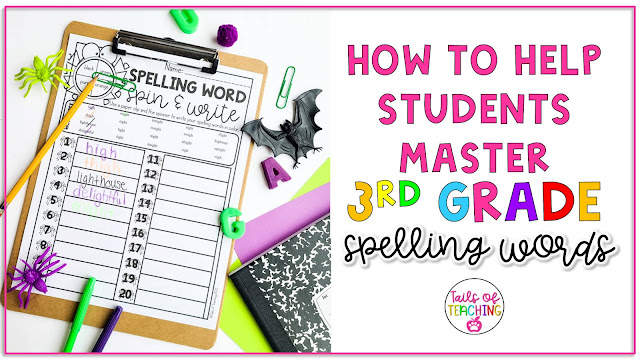
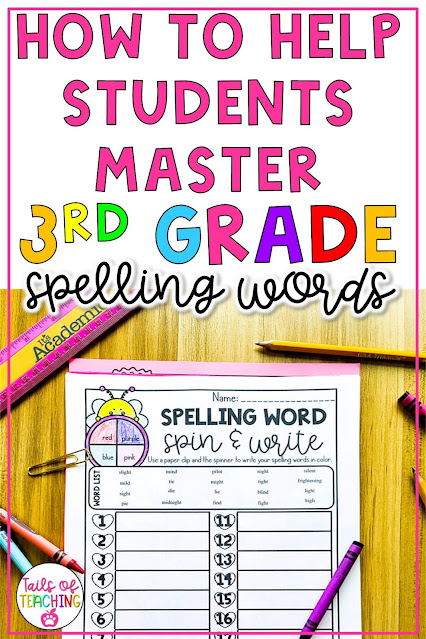
How to Help Students Master 3rd Grade Spelling Words

3rd-grade-spelling-words


The knowledge of spelling words and patterns is crucial for our learners. As teachers, we understand the importance that these skills have in reading and writing, but how do we get our students to practice their 3rd grade spelling words? Even more, how can we help students master 3rd grade spelling words? Let’s dive into it! Read more to explore my favorite methods for helping students master 3rd grade spelling words.

3rd-grade-spelling-words


Using Differentiation to Help Students Master 3rd Grade Spelling Words


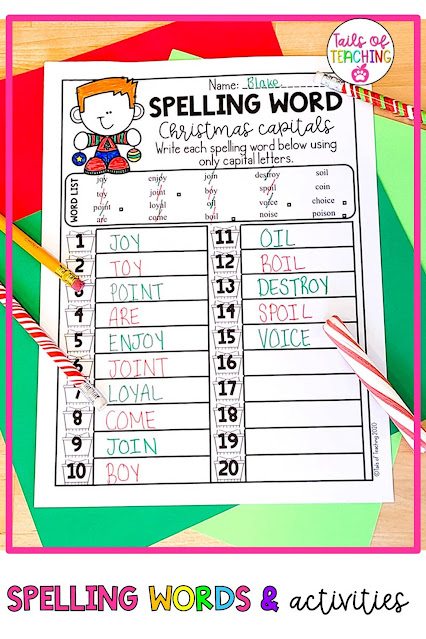
If I was a basketball player (mind you I’m not due to my lack of coordination and athletic abilities), I would need to practice shooting skills. If I master making a free throw shot but my other teammates have not, do you think my coach would have me continue to only practice free throw shots until the entire team mastered them? No way José! A great coach recognizes their player's abilities and customizes practice to strengthen each player’s needs. Teachers are just like great coaches! Teachers know that differentiation is key in driving our students forward. 
3rd-grade-spelling-words


Be sure to give a spelling pre-test before assigning any 3rd grade spelling words to your students. A spelling pre-test is simply a spelling word quiz that is given before the weekly word pattern or word list is taught. This will allow you to see which students are struggling with a list of 3rd grade spelling words, and which students are ready for a more challenging list of 3rd grade spelling words. Once you have that data, you are golden and ready to differentiate for your kiddos! Providing your students with spelling words that appropriately match their current abilities is key. Use spelling pre-tests to keep students in that sweet spot of their zone of proximal development. When students feel the next rung on the ladder is achievable, you'll be amazed at how high they will continue to climb!


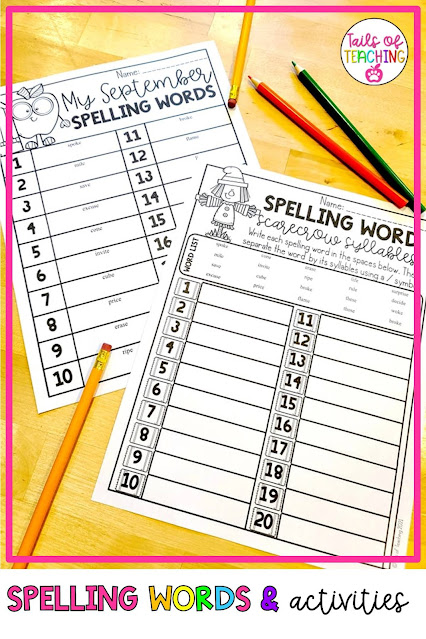
When I am differentiating my 3rd grade spelling words for my students, I like to use editable spelling activities and editable "3rd grade spelling words" worksheets. Editable spelling activities allow me to type any word list into the document and then the word list will autofill my 3rd grade spelling words onto each 3rd grade spelling words worksheet. Talk about easy-peasy differentiation! I love using editable spelling activities and worksheets because I can easily differentiate word lists and the activities still appear the same to my students the only thing that has changed is their individual word lists. Easily differentiating spelling word lists through pre-tests and editable spelling activities is one method I use to help students master their 3rd grade spelling words.

3rd-grade-spelling-words


3rd-grade-spelling-words


Using Engaging Centers to Help Students Master 3rd Grade Spelling Words


F-U-N is not usually the word that comes to mind when our students think about spelling practice. Elementary students typically find spelling activities repetitive and boring and thus are completely disengaged when doing them. What if we tried to change that? I place a big emphasis on fun in my classroom and student engagement holds a special place in my heart. This is why using engaging spelling activities is another one of my favorite methods for helping students master their 3rd grade spelling words. I know what you’re thinking, great another thing I have to find online, create or make! No worries teacher friend! Creating engaging spelling centers can be as simple as adding paper clip spinners, allowing students to draw the visualization of their spelling words, or write in funny fonts! Try writing the alphabet on a pop-it fidget or using erasable sleeves and letter beads for even more student engagement in your spelling word centers!

3rd-grade-spelling-words


My kiddos loved practicing their 3rd grade spelling words using these simple and engaging tips! I noticed a huge increase in their desire to practice spelling words. They also had much improved retention of 3rd grade spelling words and spelling skills after implementing more engaging spelling centers in my classroom. You can explore the editable spelling centers that I use by clicking HERE.

3rd-grade-spelling-words


Using Weekly Spelling Homework to Help Students Master 3rd Grade Spelling Words


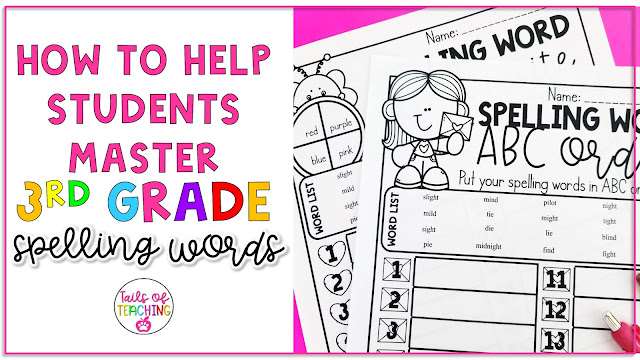
Let me be honest teacher friend, I hate giving homework! I push my kiddo's brains all day at school. I want my students to enjoy their downtime when they are home; play sports, spend time with their families, and not stress about my assignments. However, I do acknowledge the benefits that homework can have. From increasing home to school communication of current skills to additional skill practice time, homework can really help your students master their 3rd grade spelling words. However, If you’re not a fan of assigning homework like me, allow me to share an idea with you. Have you tried weekly spelling packets before? The keyword here teacher friend is weekly, not nightly. I print out homework spelling packets for my students and pass them out on Monday. I will typically assign three 3rd grade spelling words activities in the packets I create. I then tell my students that their 3rd grade spelling words homework packets are not due until Friday. My student's families love this flexibility! Assigning weekly spelling packets instead of nightly 3rd grade spelling words worksheets allows students to practice their 3rd grade spelling words on nights that are best for their schedules. This flexibility increases the completed spelling word packets that I receive each week and thus my students are practicing more each week. This weekly extra practice is a great help in your students mastering their 3rd grade spelling words.

3rd-grade-spelling-words


I hope you enjoyed reading my favorite methods for helping students master their 3rd grade spelling words. If you want to explore the resources/ teaching tools that I have used to help my students master their 3rd grade spelling words, CLICK HERE to see them now.

3rd-grade-spelling-words


If you want to learn about my no-prep fall spelling activities, click here to read my blog now!


Are you ready to rock your writing workshop this year? I've got your back and the tools you need with my epic new writing workshop FREEBIE! This writing workshop includes everything you need to get your writing block rocking, rolling, and make a massive impact with your students! I would love to share my writing workshop checklist, posters, and 5 printable + Google Classroom ready writing prompt resource with you so you can try out the tips you just read about! Simply click the button below and download your FREE writing workshop resources now! 

writing-workshop


Thursday, October 14

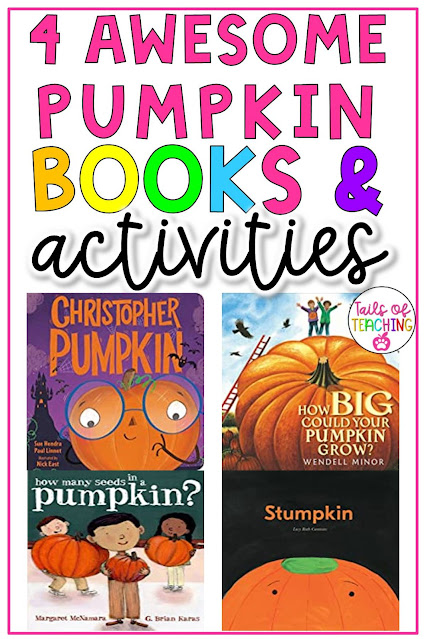
4 Awesome Pumpkin Books and Activities

pumpkin-books


Pumpkin spice and pumpkin books are nice! I love fall in the classroom. I especially love incorporating fall themed activities and pumpkin books whenever possible. There are so many fantastic pumpkin books and paired activities to do with your students this time of year. From reading strategies lessons to STEM activities, there are countless options and ways to bring in the fall fun with pumpkin books. Read more to explore my favorite pumpkin read alouds and easy paired activities.


pumpkin-books


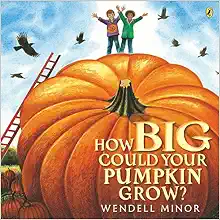
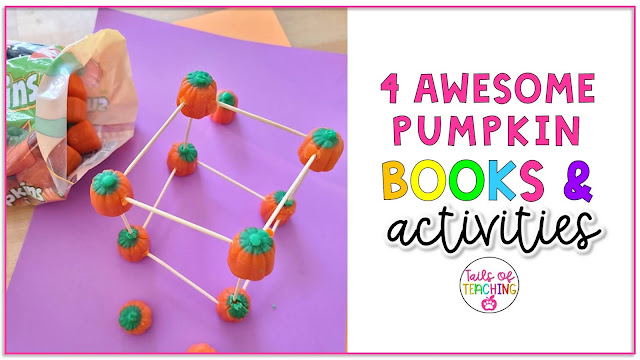
The first pumpkin book that I love to read this time of year is called  How Big Could Your Pumpkin Grow? This is a sweet pumpkin book that brings students' imaginations to like as they explore larger than life pumpkins across different American landscapes. I love to pair this pumpkin book with a STEM activity in my classroom. I provide my students with a set number of pumpkin candies and toothpicks. I allow them to work with partners for a designated amount of time and see who can build the tallest pumpkin tower. How big can the pumpkin towers grow? Try it in your classroom and find out!

pumpkin-books


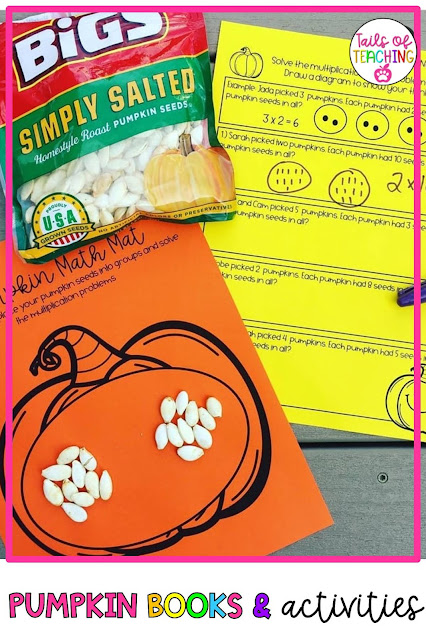
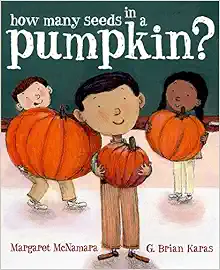
Another favorite pumpkin book in my classroom is called How Many Seeds in a Pumpkin? I love this pumpkin book! It is an adorable story about the shortest boy in the class and a very special pumpkin seed counting activity that helps him to realize that he is perfect just the way he is. I enjoy pairing this pumpkin book with a hands-on pumpkin seed word problem activity. You can explore the pumpkin math activity that I use by clicking HERE.

pumpkin-books


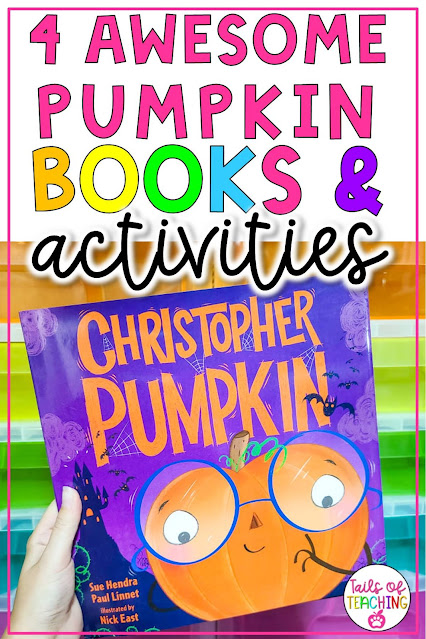
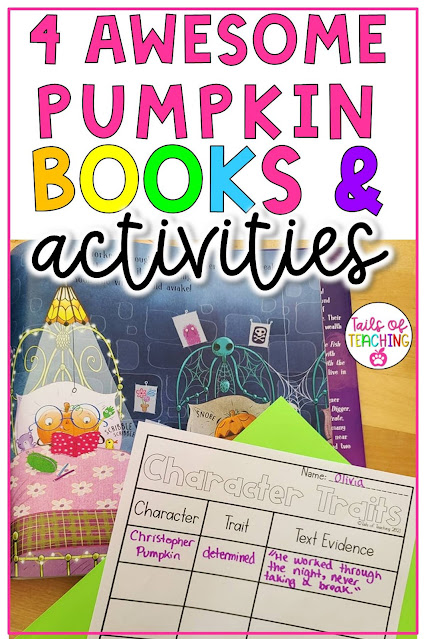
Christopher Pumpkin has to be one of my favorite pumpkin books! I love this little pumpkin's personality and determination to make a spooky castle full of, “all things fun.” I like to use this delightful pumpkin book to spread a little Halloween cheer as well as review character traits with my students. You can explore the character trait tools that I use by clicking HERE.

pumpkin-books


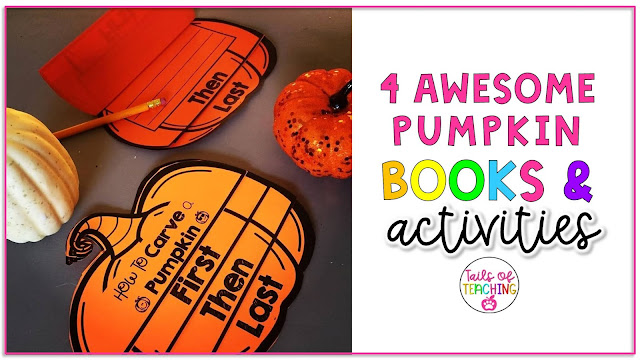
Finally, the last pumpkin book on my list of favorite pumpkin read alouds is a book called Stumpkin. This is an adorable story about a pumpkin that looks a bit different than the other pumpkins on the shelf and wonders if anyone will ever pick him to be their jack-o-lantern for Halloween. I like to use this read aloud to review chronological order writing with my students. First we review what happened first, then, next, later, and finally in the story. Then students break down the steps they would take to carve a jack-o-lantern  and write them in a pumpkin flip book. You can explore the How to Carve a Pumpkin flip book that I use by clicking HERE. 

pumpkin-books


I hope you enjoyed hearing my top favorite pumpkin books and paired activities. Which pumpkin books do you love to share with your students?

pumpkin-books


Looking to explore all of the teaching tools in this blog post? Click the pictures below now!
Thursday, September 16

How to Build Strong Readers with Reading Strategies

reading-strategies


Have you ever played with blocks before? Have you used those colorful shapes to build a little house or a soaring tower? Well if you have constructed any building from blocks, you know that one thing is certain, a sturdy foundation is key in your tower successfully standing tall and not crumbling to the floor. Reading instruction is a lot like building a tower. If readers have a strong foundation of reading strategies and skills to build from, they can springboard their mastery and love of reading. However, when students don’t have a sturdy foundation of reading strategies, that's when we see our kiddos struggle and quickly turn into resistant and reluctant readers. Reading strategies are crucial but how do we teach reading strategies? Which reading strategies do our students need the most? Well, stay tuned teacher friend because I’m going to share all of my favorite tips and strategies for teaching a strong foundation of reading strategies and building a love of reading in your kiddos that is made to last.


What are Reading Strategies?


Reading strategies are just that, strategies and skills that students can use to understand and grow in their mastery and craft as readers. Let’s use this example, you are reading a story and the main character comes inside soaking wet with a frown on their face. Using the clues the author gave us, as the reader, we can piece together that our main character is most likely unhappy because they got caught in the rain. We just used a reading strategy called inferencing to understand the story and character better. This understanding may not seem like a big deal, but as readers dive further into understanding the characters in this story and more complex stories, this reading strategy skill of inferencing will be crucial for deep thinking and understanding of story characters. There are many other reading strategies like the example above, but they all share one thing in common, they are essential for our students to become strong, avid readers who understand the what and why of the text they are reading. 


reading-strategies

How I Teach Reading Strategies


So we have established that reading strategies are uber important for our students to grow as readers, but how do we teach them? There are many methods for teaching reading strategies to your students. Below are the tools and practices that I use when teaching reading strategies to my students.


reading-strategies

Using Video to Introduce Reading Strategies:


Ok I know you are probably making a face after reading that heading, but hear me out. Today's students are complex thinkers and learners. Not all are auditory learners and if I have an option to teach to one of their other intelligences (visual/ technological) then I jump on it. I have found that Pixar Shorts can be an incredibly powerful and HIGHLY engaging tool to use when you are introducing reading strategies to your students. These are brief animated videos that demonstrate one skill or lesson. These videos can be a great place to start when teaching reading strategies to your students. You can explore them HERE.


Using Anchor Charts to Teach Reading Strategies:


Visuals are everything. When I introduce new reading strategies to my students, I always have an anchor chart handy. I personally hate drawing anchor charts, mine just never seem to come out right, so I print mine instead and make my teacher life a little easier hallelujah! I have a reading strategies skill anchor chart next to me when I introduce and teach the skill to aid my students as a visual tool while they learn. I will refer to the anchor chart in our lesson that follows the Pixar Short film, during our reading of a mentor text, and after to really sink in those new skills. Finally, I make sure my students have exact copies of my teaching anchor chart, which they will glue into their reading strategies notebook. Here they house all of their reading strategies anchor charts and tools so they can access them whenever they need to be it during independent work time or at home for homework. Making sure my students have access to the same tools I use in my lessons is a huge game-changer in their ability to practice their reading strategies. 

reading-strategies


Using Picture Books to Teach Reading Strategies:


I am a huge lover of picture books (if you follow me on Instagram you already know this). I use picture books as my mentor texts when I first introduce a reading strategy. Yes, even with fourth graders and older students, picture books can pack a big punch! If you pick the right picture books, they can offer a strong dose of exactly what you need in such a short amount of time (something that chapter books, unfortunately, cannot do). After I have introduced the reading strategy that will be focusing on, I ask my students to be “reading detectives” and see if they can hunt down the reading strategies in the story as we read. My students love playing this sort of game as we read together and it helps to boost their engagement as we learn new reading strategies together. 


reading-strategies

Practicing Reading Strategies:


After I have taught my students a new reading strategy through short videos, lessons, anchor charts, and mentor text examples, it is time for them to practice the “you do” part of learning a new skill. I have my students practice the new skill by being “reading detectives” in their own books. They will look for the reading strategies inside of the book they are currently reading during our independent reading time. To keep my teacher brain less strained, I will assign them a reading strategies skill worksheet that can be used universally across all of their texts. This is such a time saver for me! I also love that the students will have consistency in the visuals of the skill I am asking them to demonstrate. If in the following days or reading units I want them to use their predicting skills, the worksheet will look the same for that skill even though their text may be different. I have found that direct reading strategies worksheets work far better for student accountability and organization than doing, "stop and jot" sticky notes in their books. I love having my students keep their worksheets inside of their reading strategies notebooks (I used 1" 3 ring binders). This is because it provides an amazing visual for my students when we conference and discuss their growth in a particular reading strategy. We can simply flip back to the first time they practiced the skill and see how much they have grown. My students truly love when we do things like this.

reading-strategies


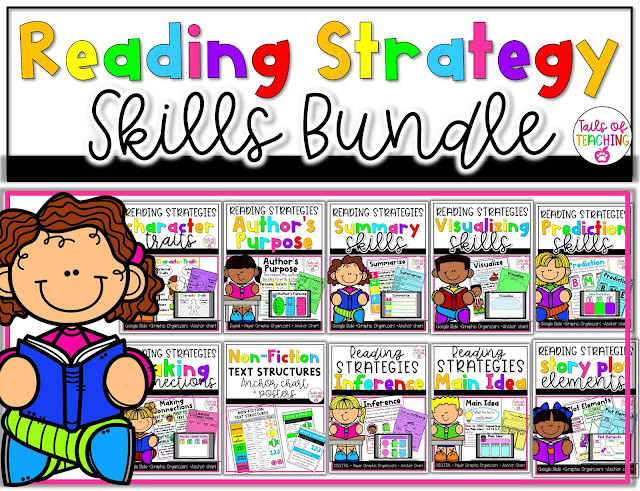
Reading strategies are crucial for building a sturdy foundation for your students to grow from and build a love of reading. I hope you learned some helpful tips and strategies about how I teach reading strategies. If you want to explore any of the reading strategies tools you saw in this post, simply click HERE. 


reading-strategies-posters

reading-strategies


Click HERE to explore the full reading strategies bundle now!


Hey there 3rd and 4th grade teacher friends, this ones for you! I have a question to ask…

What if you didn’t have to waste endless hours hunting for engaging and rigorous resources? Resources that you can trust to create massive impact and constant light bulb moments with your students? What if you could regain those precious hours, nights, and weekends that you usually waste hunting for teaching tools? Well, your teacher wishes are about to be answered with the best membership for grade 3 and 4 teachers, The Elementary Teacher Toolkit! We are a membership that gives you back your precious time, reduces your teacher stress, and supports you as you grow and teach.


Want to see a FREE sample of what we’re all about? Click HERE to download a free sample kit of all the goodness that is waiting for you when you join us in The Elementary Teacher Toolkit!